
The Digital Divide: Esther Chunga on Why Maternal Mental Health Cannot Be Separated From a Mother’s Environment

Share

Motherhood does not happen in isolation. For many mothers raising children in under-resourced communities, the emotional demands of parenting exist alongside financial hardship, unemployment, overcrowding, relationship difficulties, gender-based violence and the everyday uncertainty of trying to keep a family afloat.
For Esther Chunga, Executive Director of the Ububele Educational and Psychotherapy Trust, understanding maternal mental health means looking beyond a diagnosis or a single symptom and considering the circumstances in which a mother is expected to care for her child. A mother may be exhausted, anxious, irritable or emotionally depleted, while still getting up each morning, tending to her household and meeting everyone else’s needs.
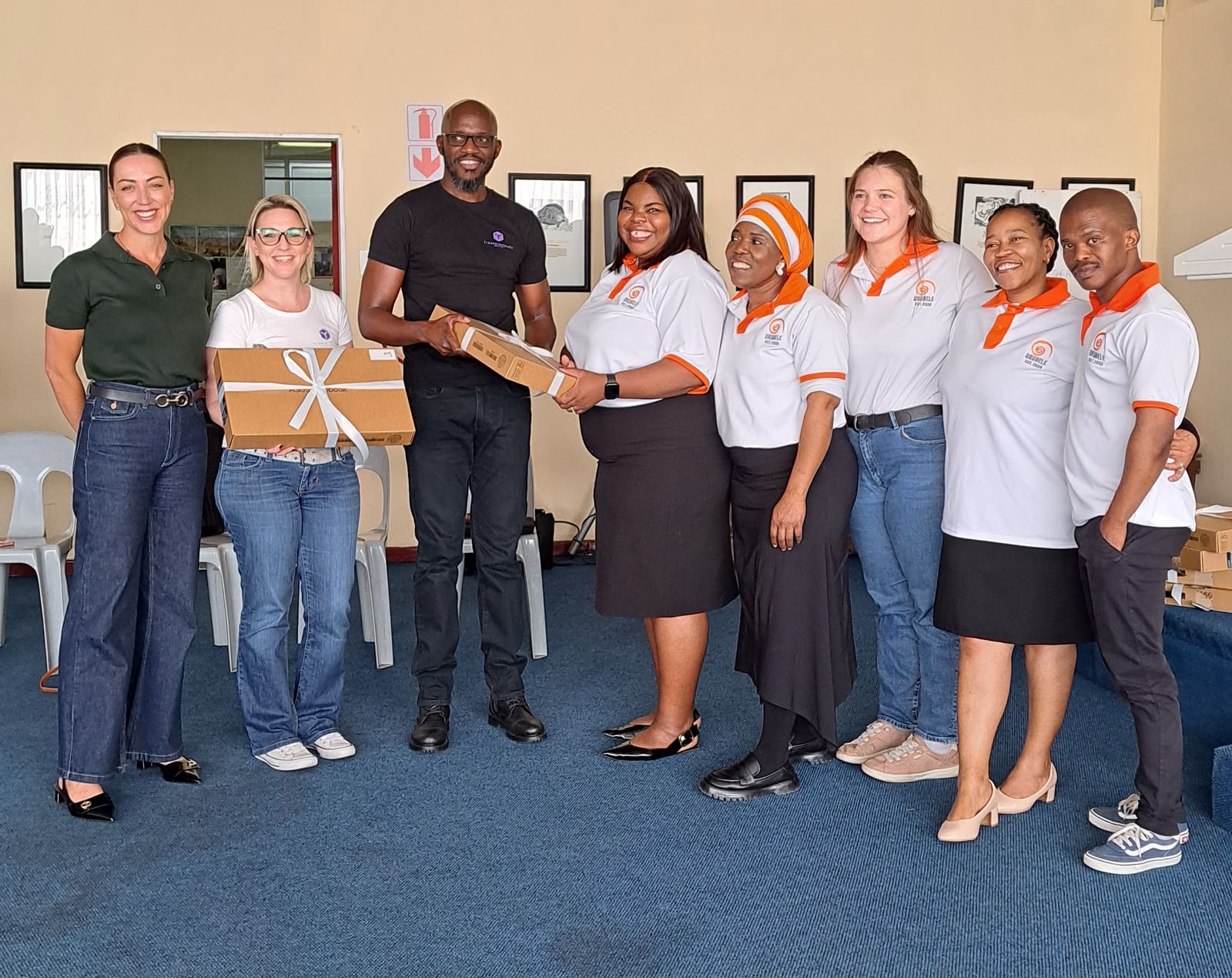
It is within this reality that Ububele has spent more than two decades supporting children, parents and caregivers in Alexandra and surrounding communities. As the organisation strengthens its digital capacity through a recent donation of 15 laptops from TransmissionCo, the partnership raises a broader question: how can Africa’s growing investment in digital infrastructure translate into meaningful change for the families and communities who need support most?
Batswadi Magazine speaks to Chunga about maternal mental health, the critical relationship between parent and child, the barriers families face in accessing support and why digital inclusion has the potential to strengthen community-based care.
1. Ububele works closely with mothers, infants and families in Alexandra. What are some of the biggest mental health and emotional challenges you are seeing among young mothers in the community today?
Residents of Alexandra face significant socioeconomic and contextual challenges, including financial hardship, unemployment, overcrowding and, for many families, exposure to violence and instability. These challenges are compounded by the ordinary, as well as extraordinary, emotional and practical pressures of being a mother.
Many of the young mothers we work with are carrying enormous burdens. They may be navigating financial difficulties, unemployment, relationship challenges, gender-based violence, limited social support and, in some cases, their own histories of trauma, while at the same time being expected to care for and emotionally support a young child or children.
For some mothers, this can manifest as depression, anxiety, feeling overwhelmed, or becoming emotionally withdrawn. Others may struggle to cope with the everyday demands of motherhood or find it difficult to respond to their child when they themselves are under considerable emotional strain. It is important, however, that we do not view these difficulties in isolation. A mother’s emotional wellbeing is deeply connected to the circumstances in which she is raising her child, the relationships around her and the support available to her.
At Ububele, we therefore try to understand the whole context of the mother and child rather than simply focusing on a diagnosis or a particular symptom. We are interested in creating spaces where mothers can feel heard, supported and able to reflect on their experiences of motherhood because supporting the mother in this way can also strengthen her capacity to be emotionally available and responsive to her child.
Supplied by Esther Chunga
2. We often speak about maternal mental health in clinical terms, but what does poor mental health actually look like in the everyday life of a mother who is also navigating financial pressure, limited support and the demands of raising a child?
Sometimes poor maternal mental health looks like a mother who is simply exhausted and feels that she has nothing left to give. She may become withdrawn, irritable, unable to find joy or pleasure in things that used to give her that, she may be tearful or become easily overwhelmed. She may struggle to enjoy her baby or feel guilty because she believes she is not being the mother she should be.
But it can also look much less obvious. A mother may continue doing everything that needs to be done and may, on the surface, appear to be coping just fine. She could be getting her child fed, dressed, to the clinic, managing the household and simply getting through each day while internally feeling hopeless, lonely or emotionally depleted. From the outside, she may appear to be coping, she may even appear to be happy and engaging, but there may be very little emotional space left for herself or for her relationship with her child.
We also need to be careful not to interpret these experiences as a failure of motherhood. A mother may be struggling not because she does not care about or love her child, but because she is carrying circumstances that would be extraordinarily difficult for anyone. When you are worried about where the next meal is coming from, whether you have a safe place to live, whether you can find work, or whether you have anyone to turn to, it becomes much harder to have the emotional resources that parenting requires.
For us at Ububele, maternal mental health therefore cannot be separated from the mother’s circumstances. We need to hold both things in mind: her inner emotional world and the very real pressures of the environment in which she is raising her child. Supporting maternal mental health means creating a space where a mother herself can be seen, heard and supported; not only as a caregiver, but as a person with her own emotional needs.
3. How does a mother’s emotional wellbeing affect her relationship with her baby or young child, particularly during the earliest years of development?
Babies are profoundly sensitive to the emotional availability of their caregivers. In the earliest years, children develop their sense of safety and security through repeated experiences of being held, responded to, comforted and understood. These everyday interactions help a baby begin to develop an understanding of themselves, of other people and of the world around them. In many ways, they learn to become a person through their primary relationships.
When a mother or caregiver is experiencing significant emotional distress, it can sometimes become harder for her to notice and respond to her baby’s cues. She may feel less emotionally available, become preoccupied with her own worries, or find it difficult to enjoy her baby. At times, the baby’s needs can feel like another demand when she already feels that she has very little left to give.
It is also important to recognise that the relationship between a mother and baby is reciprocal. The baby is responding to the mother, and the mother is responding to the baby. When a mother is struggling, the relationship can become more difficult, but this does not mean that she is a bad mother or that these difficulties are permanent.
And this is exactly why early intervention is so important. At Ububele, our parent-infant interventions focus on the first 1,000 days of a child’s life because this is such a significant period for prevention and healthy development. During this time, the brain is developing rapidly, and the quality of a child’s early relationships and experiences can influence their capacity for learning, emotional regulation, relationships and social development over time.
Our programmes therefore don’t simply ask, “What is wrong with the mother?” We ask, “What is happening between this mother and her baby, and how can we support both of them?” By creating a space where the mother-baby dyad feels supported and understood, we can strengthen the mother’s capacity to notice, understand and respond to her child.
Ultimately, this is about more than preventing mental health difficulties. These early relationships contribute to the development of children who are able to learn, form relationships, regulate their emotions and participate meaningfully in their communities. Investing in mothers and babies is therefore also an investment in the kind of adults and citizens our society will have in the future.

Esther Chunga | Supplied
4. For many parents, accessing therapy or parenting support can be difficult because of cost, transport, time or stigma. How can digital access help close some of those gaps without losing the human connection that is so important in mental health care?
Digital technology can remove some very real barriers to accessing mental health support. For parents who may struggle with transport costs, long distances, time away from work or childcare responsibilities, digital platforms can make it easier to access information, parenting support and mental health services without always having to travel.
At Ububele, we offer a range of digital and online services including our VUNA Parenting Hub. VUNA is a free, WhatsApp-based support service primarily for parents and caregivers of children under two. It provides parents with supportive and psychoeducational information around pregnancy, child development and parenting, while also connecting them to Ububele’s broader first-1,000-days services, including parent-infant psychotherapy and support groups.
What is particularly important about VUNA is that it is not a bot-based intervention. It is a manned, human-supported service looked after by psychologists and Early Childhood Community Practitioners. WhatsApp is the platform through which we reach parents, but behind that digital connection are people who can engage with parents and, where necessary, connect them to more appropriate forms of support.
That distinction is very important to us because mental health care is fundamentally relational.
VUNA originally developed partly in response to the COVID-19 pandemic, when we needed to find ways of maintaining connection with parents despite restrictions on face-to-face services. What we learnt was that there was value in being able to reach families remotely even beyond the pandemic.
There is also a preventative element to the service. A parent may not necessarily identify themselves as needing “mental health care”, but they may be looking for information about their baby’s development, wondering whether something they are experiencing is normal, or simply needing encouragement in what can be a very demanding period of parenting. VUNA can provide an accessible entry point into support and, when needed, into more specialised services, including the opportunity for our practitioners to assess risk.
Of course, we also have to be mindful of the digital divide. Having a phone does not necessarily mean having reliable data, connectivity or privacy. Digital interventions therefore need to be designed around the realities of the communities we work with. With VUNA, the technology is really the doorway and the relationship remains the intervention.
5. The new laptops will support areas such as case management, therapy documentation and online parenting groups. In practical terms, how could improvements like these change the experience of a mother or family seeking support from Ububele?
Good technology infrastructure may seem like a small thing, but it can have a significant impact on the quality and continuity of care that a family receives.
Our clinicians need to document their work, manage cases, communicate with one another and coordinate services across different programmes in a safe way. When practitioners have reliable equipment, these processes become more efficient. It means that information can be recorded and accessed appropriately, communication between team members is easier, and there is less time lost to administrative difficulties. Ultimately, this gives our practitioners more capacity to focus on the families they are supporting.
For a mother, this can translate into something very simple but very important: continuity and the smooth transition between interventions if that is the need. Her experience should feel connected, with the professionals supporting her able to work together and understand the broader context of her and her child’s needs.
The laptops will also create greater opportunities for online parenting groups, online therapy, writing up of psychoeducational reports, training and other forms of engagement. For a beneficiary who may find it difficult to travel because of childcare, transport costs, work or other responsibilities, having another way to connect with support can make a meaningful difference.
So essentially, the laptops are tools that enable our practitioners to do their work more effectively.
6. As more parenting and mental health resources move online, how do we ensure that vulnerable families are not left behind because they lack devices, data, digital literacy or reliable connectivity?
We have to be very intentional about digital inclusion. Providing technology to organisations is important, but it is only one part of the solution. We also have to ask whether families themselves have access to devices, affordable data, reliable connectivity, privacy and the skills and confidence to use digital platforms.
This is particularly important in communities such as Alexandra, where families may share devices or have limited access to data and connectivity. We cannot assume that because someone has a cellphone, they automatically have meaningful access to digital services.
At Ububele, we maintain different pathways into care so that a beneficiary is not excluded simply because they cannot participate online. A family should be able to access support through the route that is most realistic and appropriate for their circumstances.
The goal is to use technology thoughtfully to expand access, while continuing to provide the human, relational and community-based support that is at the heart of mental health care.
7. Ububele’s work recognises the importance of the relationship between a child and caregiver in shaping long-term wellbeing. What can parents do in their everyday interactions with their children to help build emotional security and resilience, even when they themselves are under significant stress?
Children don’t need perfect parents, actually; there is no such thing. Children need caregivers who are able, and often enough, to notice them, respond to them and repair things when something goes wrong. It is not about getting it right all the time; it is about being able to reconnect when things go wrong. It is about being a ‘good enough parent’.
Part of what it means to be a good enough parent is by being intentional even about the simple things, because they matter significantly. Talking to your child, making eye contact, listening when they communicate, responding to them, helping them regulate their emotions, naming their feelings, comforting them when they are distressed, playing with them and taking an interest in what they are doing are all ways of building connection.
Even ordinary routines such as feeding, bathing, getting dressed, preparing for hellos and goodbyes or settling a child to sleep can become opportunities for a parent and child to connect.
And importantly, parents also need to be cared for. When a parent is under significant stress, asking for help is not a sign of weakness or failure. In fact, being able to recognise that you need support is an important part of caring for your child.
Sometimes we can make parenting feel much more complicated than it needs to be. A child needs to feel that they matter, that someone is interested in them, and that when they are distressed, someone will try to understand and help them. Those small, repeated moments of connection are incredibly important in building a child’s sense of security and overall wellbeing.
8. When we talk about investing in digital infrastructure across Africa, what would meaningful impact look like from your perspective? How do we move beyond simply providing technology towards creating stronger families and healthier communities?
Meaningful impact is ultimately about what the technology enables people to do. A laptop is not, in itself, an intervention. Its value lies in whether it helps a practitioner provide better care, enables an organisation to reach more families, strengthens communication and continuity of care, or gives a parent access to support that might otherwise have been out of reach.
We also need to invest in the infrastructure around the technology. That means investing in people, training, affordable data and connectivity, digital literacy, mental health services and community-based organisations that understand the realities of the families they serve.
This is why we are so grateful to Transmission Co for investing in Ububele through the donation of 15 new laptops. While a laptop may seem like a simple piece of equipment, for a small community-based organisation like ours, this kind of investment has a very practical and meaningful impact. It enables our clinicians and community practitioners to document their work, communicate more effectively, manage cases and expand the ways in which we can connect with families.
We are very grateful to Transmission Co for recognising that strengthening the infrastructure of organisations like Ububele is also an investment in the families and communities we serve.
At Ububele, we believe that investing in the earliest relationships between children and their caregivers is an investment in the future of our communities, country and continent. If technology helps us reach more families, support practitioners and strengthen relationships, then it has real value.


