
Co-Sleeping, Safety & the Nervous System: Rethinking “Independent Sleep”

Share
Worthy Parent, Worthy Child — by Ntombenhle Khathwane
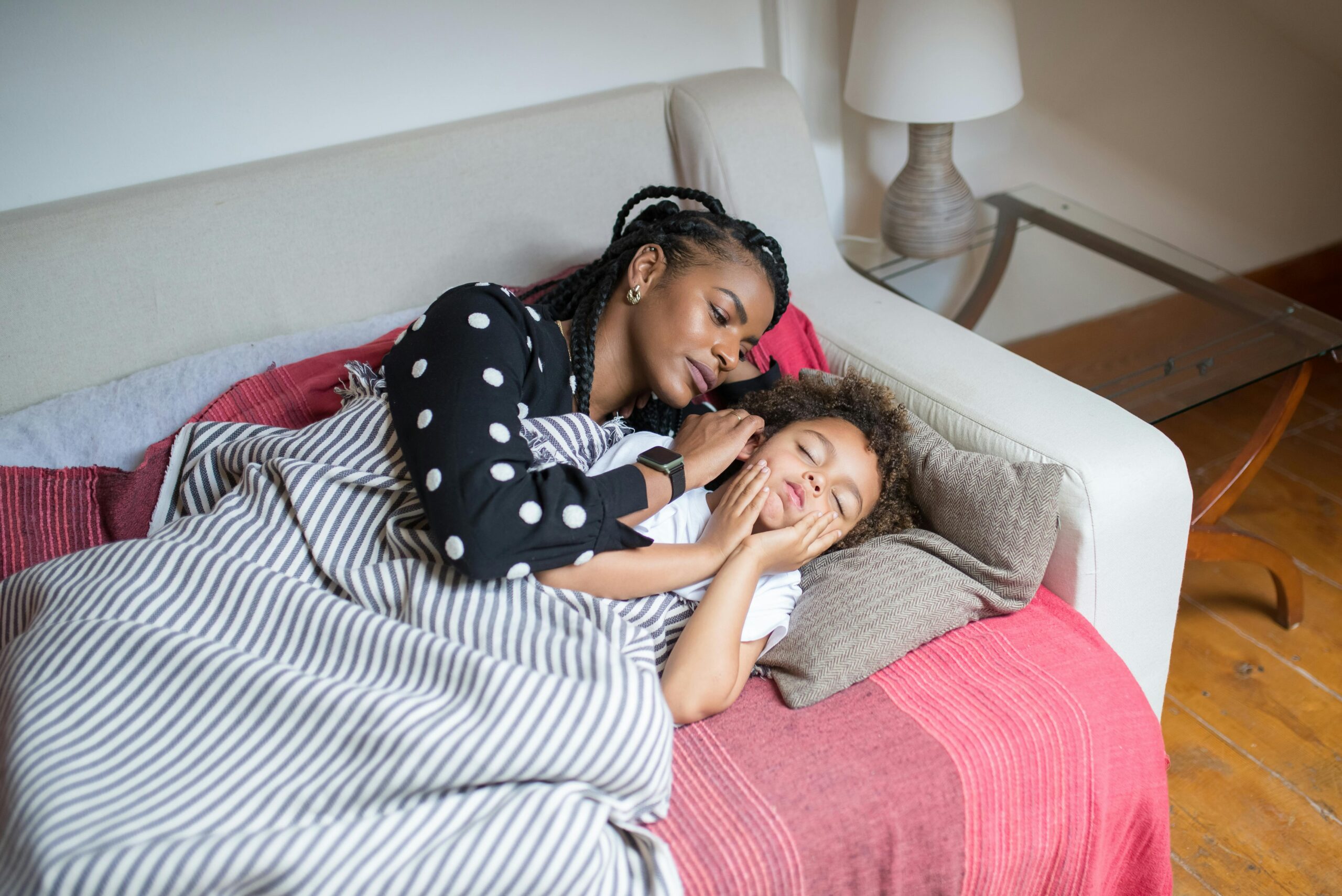
I know now that babies, children, are wired for independence, for growth, they do not need to be taught it, they naturally thrive for it. What interrupts their natural push for independence are the things we, as parents and caregivers, do with good intentions that challenge their primary need for safety. When a child’s safety is challenged, they essentially go numb and freeze and can become stunted, and we won’t even know it! When I became a mother, one of the main rules I read in many parenting books was, babies sleep away from you so they can “learn independence.” I tried that script. But my instinct kept whispering another story, that closeness at night is not spoiling, it’s soothing.

I co-slept with my 3 children until around five or six, when they naturally transitioned on their own and wanted to sleep in their own rooms. I saw real benefits, easier preschool transitions, less separation anxiety, and calmer nights for all of us. And it brought their daddy and I closer, and built a closer relationship between him and his kids. Today, in a world where childhood anxiety and sleep struggles are deeper and rising, I want to gently challenge “conventional” parenting and invite us to remember what many ancient cultures have always known: feeling safe is the primary work of childhood, and night-time proximity can help wire that safety.
Growing up, my parent’s bedroom was a no-go zone, and I wanted to change that for my family. I want my kids to feel free in every room in their home. The key has been teaching them to be respectful and approach our adult spaces with care and respect, just as we do their spaces. It is easier now that the youngest is 9 years old. Kids, especially when they are younger, do not have the language to express the emotional discomfort, dysregulation, they feel, yet knowing they can come to mommy or daddy for a cuddle anywhere, anytime, helps to normalise seeking assistance to co-regulate and calm their very busy nervous systems.
What we mean by “co-sleeping?”

People use the word differently, so let’s be clear:
Modern Western advice often discourages bed-sharing in infancy because of safety concerns, while many guidelines do recommend room-sharing for the early months. Across much of Africa and the global South, and historically in many societies, some form of close sleeping has been common, practical, and expected. Different homes, different norms.
Why closeness at night can help: the body science in simple words
Babies and young children regulate their bodies through us. Proximity (hearing a parent’s breathing, feeling warmth, soft touch, a known scent) supports:
This doesn’t mean every family must bed-share. It means that proximity is a biological calming signal, and we can use it – in a way that fits our home – to support nervous-system safety.
“But modern parenting says…”
A strong cultural story says independence = sleeping alone early. Yet independence grows from secure dependence. When we meet a young child’s need for closeness, we’re not creating clinginess; we’re building the security from which they can separate with confidence later.
In many African homes, older generations created safety with closeness – mothers and children shared spaces; aunties and gogos co-regulated babies through the night; siblings slept together. Somewhere along the way, some of us started to believe our rooms must be “sacred” adult spaces, children must not enter, and a child’s night-time need equals poor discipline. I honour every home’s boundaries – rest matters! – but I also believe we can reclaim ancient gentleness: proximity as a sacred rite of early childhood.

Benefits you might notice (birth to the early primary years)
None of this is a guarantee, and plenty of children sleep beautifully in their own rooms. The point is not to prove one “right way,” but to legitimise proximity as a healthy, evidence-aligned option.
A middle path: protect parental rest and keep proximity
You can mix closeness with boundaries. Try:

Safety first — always
Co-sleeping with infants requires extra care. Do not bed-share if any of the following apply:
General safety: firm mattress; no gaps where a child could roll; light bedding away from baby; baby on their back; long hair tied back; keep the sleep space cool; ensure everyone knows the plan.
If your child is past infancy (toddler to early primary), these risks reduce substantially, but still create a clear, uncluttered, firm sleep space.
When not to co-sleep (or when to pause)
Story time: one night in our house
There were seasons when preschool started early and my little one woke scanning the dark for me. A hand on her back, my slow breathing, and the whimper softened into deep sleep. Weeks later, drop-off tears shrank too. That’s the nervous system learning a new sentence: “I am safe, even when we separate.”The night’s message was teaching the day.
If co-sleeping isn’t for you
You can still feed the same nervous-system needs:
Closing thought: safety grows independence
Our children aren’t auditioning for independence at two. They’re building capacity for it. Whether you co-sleep for months or years, or keep sleep spaces separate and build a rich connection, let the guiding question be: “Does our night-time plan teach the body: I am safe?” Because a nervous system steeped in safety by night becomes a child who explores bravely by day.
There is no one right way, there is your way, shaped by love, culture, and context. Trust your instincts, honour safety, protect your rest, and let closeness be a tool, ancient and wise, for raising steady, secure little humans.


