
Gentle Isn’t Soft: What Gentle Parenting Really Is (and What Happens When We Get It Wrong)

Share
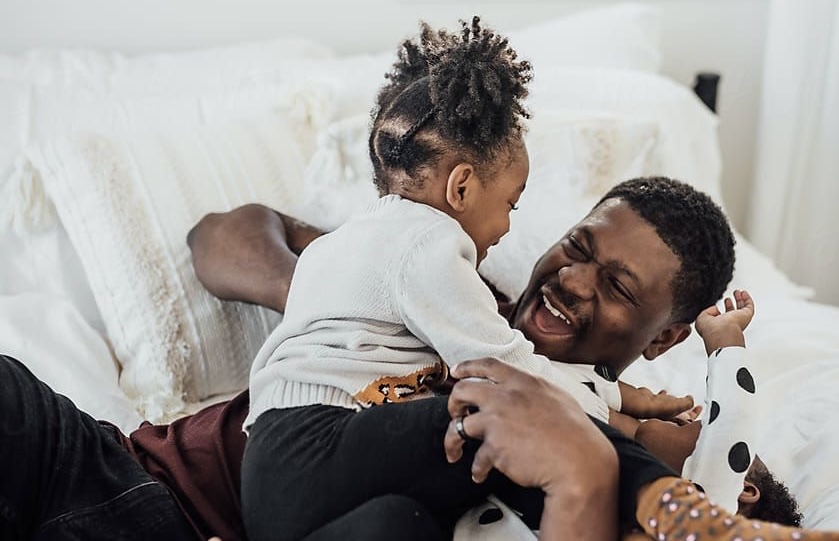
by Ntombenhle Khathwane
I’m parenting my three children more gently than the way many of us were raised. For me, gentle has never meant “anything goes.” It means from birth, I prioritise my children’s emotional wellbeing, safety, voice, and worth, while also keeping clear boundaries and consistent structure. This hasn’t always been popular. In a survival-driven world where most adults must work and many babies enter childcare very young, it can feel simpler to demand compliance and call it discipline. But I wanted my home to be the place where my children are seen and heard, where their nervous systems learn safety first. I’m already seeing the fruit: children who express who they are, who act from an inner sense of purpose, who don’t need to numb themselves with destructive behaviours to feel worthy.
That’s the heart of gentle parenting, and it is often misunderstood.
What Gentle Parenting Is (and Isn’t)
Gentle means firm and kind at the same time. It’s the daily practice of:
Seeing the need beneath the behaviour (fatigue, hunger, anxiety).
Meeting that need without abandoning boundaries.
Modelling self-regulation, then teaching it.
Repairing after ruptures (“I’m sorry I shouted; here’s how I’ll handle this next time”).
Gentle is not: permissiveness, child-as-boss, avoiding all consequences, or negotiating every limit until midnight. When people say gentle parenting “doesn’t work,” they usually mean permissive parenting, warmth with no structure. True gentleness blends attachment + accountability.
Neuroscience backs this: responsive, warm, predictable caregiving helps children regulate emotions and develop resilience and healthy relationships, the very foundation for learning and behaviour.
When “Gentle” Goes Wrong
I’ve seen gentle parenting misapplied in ways that do create chaos:
Boundary blur: Parents fear being “too strict,” so limits are unclear or always shifting. Children feel less safe, not more.
Over-explaining, under-holding: We talk, talk, talk, but won’t hold the line. Children learn that persistence, whining or panic will move the goalposts.
Parent self-abandonment: We ignore our own basic needs (sleep, decompression) to be endlessly available. Resentment builds; dysregulation increases for everyone.
Apology without adjustment: “Sorry” becomes ritual, but nothing changes. Trust erodes.
Done wrong, “gentle” can produce anxious, boundary-testing kids and burned-out parents. Done right, it produces secure, honest, compassionate humans who respect their own boundaries and others’.
Why Our Children Need Something Different – Now
South African children are coming of age in a context of high stress: exposure to violence, inequality, online harm, academic pressure, and mental-health needs that outstrip available services. UNICEF South Africa’s recent youth poll found 60% of young people felt they needed mental-health support in the past year (73% in 2022). That’s not a footnote; it is a siren.
At the same time, our legal and moral compass is shifting. In 2019, South Africa’s Constitutional Court struck down the common-law defence of “reasonable chastisement” of children. The message is clear: violence isn’t discipline. We are called to build homes that teach, not terrify.
And the stakes are real. UNICEF has warned repeatedly about the scale of violence against children; recent SAPS stats highlighted hundreds of child murders and thousands of violent attacks in a single quarter, evidence that harshness and harm are already too common in our children’s ecosystems. Our homes must become counter-cultures of safety.
Add the practical reality: millions of 0–4-year-olds are in Early Learning Programmes or care arrangements while caregivers work. That’s life, so the quality of connection we bring when we are together matters even more.
What Gentle Parenting Looks Like (On a Tuesday Night)
1) See the signal, keep the boundary
“I hear you don’t want to turn off the TV. It’s hard to stop something fun. And we’re done for tonight. Do you want to press the button or should I?”
2) Co-regulate first, correct second
Kneel, breathe together, hand on shoulder. When the nervous system settles, the frontal lobe returns, and so does learning.
3) Predictability as love
Routines are nervous-system medicine. They remove 50 small fights a day.
4) Natural consequences, not humiliation
“You threw the blocks. Blocks are for building. We’ll try again tomorrow.”
Short, calm, consistent. No lectures, no shame.
5) Repair as a family habit
“I was rough with my words. I’m working on using a calm voice. Next time I’ll pause. You can remind me with ‘Mom, breathe.’”
Gentle homes aren’t quiet because children are “perfect.” They’re calmer because adults lead, with presence and predictability.
But What About Tough Behaviour?
Gentle parenting isn’t naïve. It assumes behaviour is communication, and then it teaches.
Aggression: remove the audience, protect safety, practise replacement skills (squeeze ball, “red light” pause, “use words” script).
Lying: name the fear, reconnect, re-do (“Let’s start over. Try telling me the hard truth; my love doesn’t move”).
School refusal: treat it as a nervous-system problem first (sleep, transitions, peer stress), not a moral failure. Problem-solve together.
Warmth and limits, always together.
What Past Modalities Produced
Many of us were raised under authoritarian norms, “because I said so,” smacks for mistakes, fear as a tool. Some of us were raised under neglectful norms, emotionally alone, figuring out big feelings without help. Those approaches may produce compliance, but often at a cost: perfectionism, people-pleasing, secretiveness, chronic anxiety, and the inner scripts we’ve spoken about in this column, “I’m not enough, I don’t matter, I’m not safe.” A nation trying to heal violence cannot keep tutoring children in fear at home.
A South African Gentle: Firm, Kind, Communal
Gentle parenting doesn’t mimic a Pinterest board; it honours culture and context:
In multigenerational homes, enlist gogos and aunties in bedtime rituals, storytelling, and morning affirmations.
Use all her languages to praise, set limits, and build identity, multilingual pride expands a child’s sense of self.
When childcare starts early, saturate transitions with connection: longer bedtime presence, a goodbye ritual, after-school “re-entry” cuddle and snack.
If finances are tight, remember: the most potent tools are free, eye contact, play, story, routine, repair.
Gentle is not anti-discipline. It is discipline that protects dignity.
How I Practice (and What I’m Seeing)
I chose unpopular roads: more listening, fewer threats; more routines, fewer punishments; more repair, fewer grudges. My goal was never “perfect children.” It was integrated humans, kids whose bodies believe “I am safe,” whose voices say “I belong,” whose choices flow from values, not fear. I see it now in how they speak up, apologise, try again, and walk away from social shortcuts that promise belonging but steal identity. That’s the long game: reduce the need for numbing and performative living by growing worthiness at home.
A Quick Starter Map

Pexel images
Say it short. Limits in one sentence: “Hitting hurts; hands are for helping.”
Anchor the day. Same wake, meals, wind-down. Predictability lowers explosions.
Teach a pause. Family signal (“red light”) to stop, breathe, reset.
Name feelings, not villains. “You’re furious and your body wants to throw. Let’s stomp together.”
End with repair. “How can we make this right?” Let the child suggest a fix.
Guard your fuel. Gentle needs rested adults. Trade off, ask for help, simplify evenings.
The Country We’re Building at Home
Gentle parenting is not a trend. It is nation-building in miniature: homes that practise safety instead of domination, boundaries instead of brutality, accountability instead of shame. South Africa’s children need it urgently, our data on violence and mental health tells us why; our Constitutional Court tells us who we aspire to be. And our children, when they feel safe and worthy, show us what becomes possible.
We can raise a kinder, more equitable world by changing how we use power with the smallest people in the room. Gentle is not soft. It is strong, steady love. And it works.


