Understanding and Calming Your Child’s Nervous System as the School Year Begins

Share

Worthy Parent, Worthy Child — by Ntombenhle Khathwane
A new school year looks exciting on the outside, new uniform, new stationery, new goals. But inside your child’s body, something deeper is happening.
Their nervous system is taking stock.
A lot is changing in your child’s world: they are a year older, moving to a higher grade, possibly stepping into a new class, a new teacher, new friends, new rules, new expectations. They may also be starting new activities and sports, navigating a new routine, and adjusting to a bigger workload. Even if they appear “fine,” their body is still asking one continuous question:
“Am I safe here?”
Many parents unintentionally outsource this part of child development to schools. We assume the school will parent our children through the transition. But the truth is: most schools do not have the capacity to nurture nervous systems, not because teachers don’t care, but because classrooms are busy, overstretched environments. Schools can teach. Schools can manage behaviour. But children, especially younger ones, need something more foundational than behaviour management. They need felt safety.
And felt safety is not a policy. It’s a nervous-system experience.
The nervous system, simplified
Your child’s nervous system is like an internal safety alarm and recovery system. When it senses safety, the body opens up for learning, socialising, digestion, sleep, and creativity. When it senses danger (even the “danger” of uncertainty and unfamiliarity), the body shifts into protection mode.
Protection mode can look like:
● clinginess, tears, tantrums
● anger, defiance, controlling behaviour
● silence, shutdown, withdrawal
● stomach aches, headaches, “sudden” fatigue
● sleep disruptions, nightmares
● and yes… getting sick more often
This is why many parents notice that when school starts, especially in preschool and the early grades, children often catch “everything.” Of course, new germs play a role. But there is another layer many of us ignore: when a child’s nervous system is rattled, their body becomes more vulnerable, their immune system becomes lowered and vulnerable.
When a child is regulated, their systems, including immune system recovers faster. When they are dysregulated for long periods, their body can struggle to keep up.
One of my teachers once said, “Love is our biggest immunity.” While love isn’t medicine, the wisdom is real: when we feel safe and loved, our bodies function better, our nervous system is regulated and strong, and our immune system is strong. A child’s nervous system and immune system are deeply linked. For young children under five, stress often shows up in the body through the immune system. Their language for “I’m overwhelmed” may be: runny nose, fever, tummy ache, skin flare-ups, or constant “sniffles.”

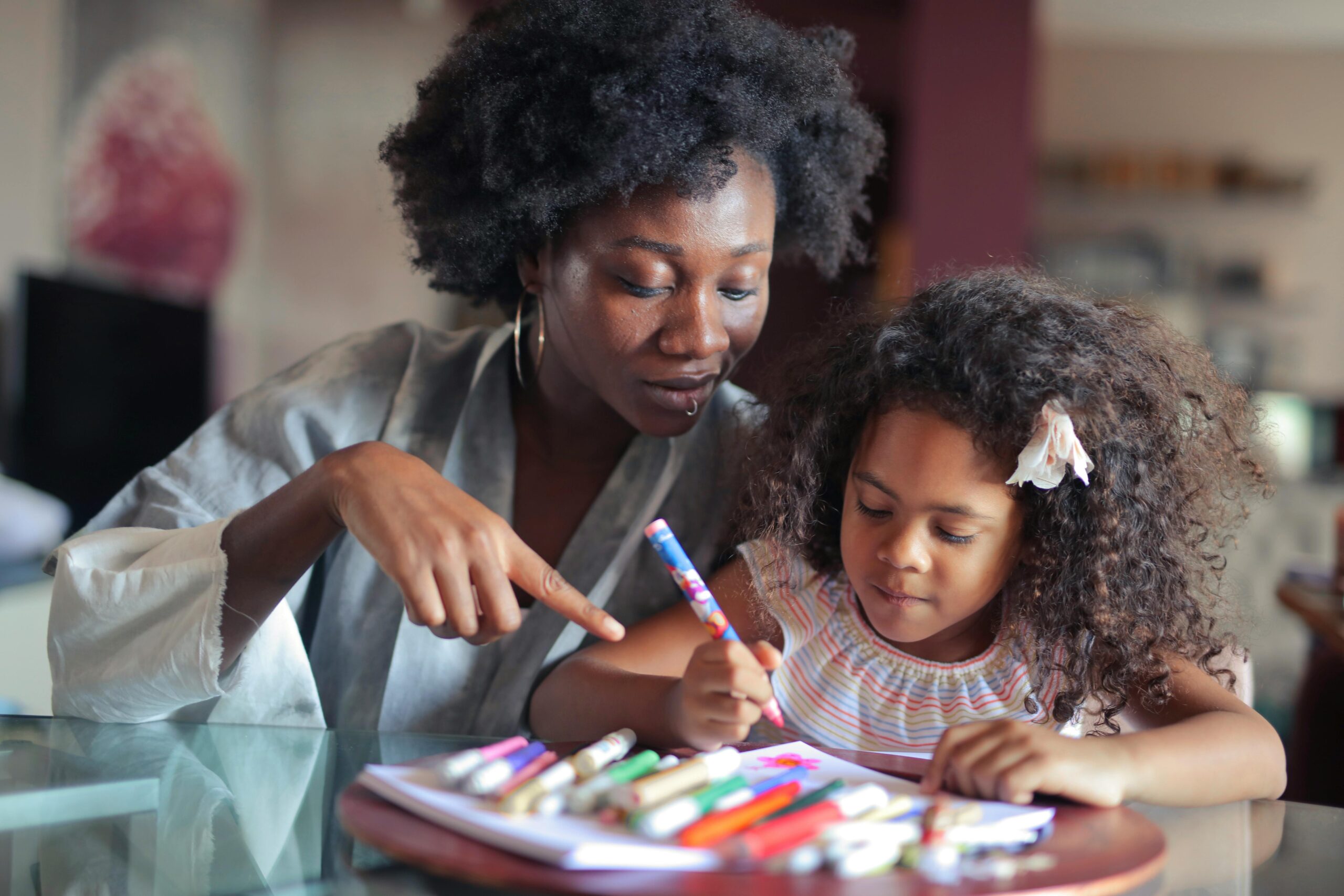
Pexel images
The hidden reality of “being okay”

I kept co-sleeping with my children until they were seven and beyond. Even now, my 10-year-old has started a new school and a new gymnastics club. One night she climbed into bed with me. She didn’t seem upset outwardly, but I could feel through her body that her nervous system was a bit rattled, her solar plexus was contracting. I placed her on my calm stomach and chest, and as her breathing softened, we spoke about her day, what felt exciting, what felt unfamiliar, what felt “too much.”
This is co-regulation: when a child borrows the calm of an adult’s nervous system to come back into safety in their own body.
When my 12-year-old started a new school too, he knew he could come to mom and dad for a hug and a cuddle and tell us what happened. He could say what made him feel anxious or unsafe. What I love about this is that it also teaches my husband to be vulnerable and speak about feelings, something many men never learned as boys. Boys often model emotional behaviour from their fathers. When fathers become emotionally present, sons gain permission to be human.
I also didn’t grow up in an environment where I expressed my emotions freely. I knew I was loved, but I didn’t speak openly about fear, anxiety, excitement, or joy with adults. I think many African homes are like this: love is present, but emotional expression is limited. So we have to do differently than what we know, because we want to raise happier, confident, fulfilled children.
What about children who start school later?
Parents often ask whether starting school later helps. For some children, yes, especially those who are highly sensitive, anxious, developmentally young for their age, or easily overwhelmed by stimulation. Being older can offer more emotional readiness, better language, and stronger self-regulation skills. But it’s not a one-size-fits-all solution.
The more useful question is: Is my child’s nervous system ready for this environment?
A child may be academically “smart,” but still nervous-system immature. Another may be socially bold, but emotionally fragile. Readiness is not only about counting and colouring. It’s about: Can they separate? Can they settle? Can they recover?
If the answer is “they struggle deeply,” it doesn’t mean something is wrong with your child. It might simply mean the environment needs more support, or the transition needs to be slower and softer.
What a healthy nervous system looks like at different ages
Children don’t need to be calm all the time. A healthy nervous system is one that can move through stress and return to safety.
Ages 1 – 3:
A healthy nervous system looks like “I can calm down with you.”
They will have big feelings, but can settle through holding, rocking, singing, routine. They return to play after comfort.
Ages 3 – 6:
A healthy nervous system looks like “I can calm down and tell you a bit.”
They may cry or protest, but can be soothed with connection and routine. They begin naming feelings (happy, scared, angry) with your help.
Ages 6 – 10:
A healthy nervous system looks like “I can reflect and recover.”
They can share what happened, identify what felt hard, and accept tools like breathing, quiet time, movement, or connection to reset.
Five ways parents can stabilise and reset a child’s nervous system

Here are five practical ways to support your child during school transitions:
1) Create rhythm before you create rules
A nervous system loves predictability. Keep mornings and evenings consistent for the first few weeks. Same bedtime, same wake time, same breakfast rhythm, same goodbye routine. Rhythm tells the body: “Life is stable.”
2) Prioritise connection after school
Many children hold it together at school and unravel at home. Instead of rushing into homework or questions, offer a soft landing:
● snack + water
● quiet time or play
● a cuddle, a bath, a walk
Then ask, “How did your body feel today?”
3) Use touch and closeness as medicine
Touch is one of the fastest ways to calm a child’s nervous system. Hugs, cuddles, holding hands, lying together at bedtime, a gentle back rub during a story, these are not “spoiling.” They are biological regulation.
If co-sleeping works for your family, it can be a powerful nervous-system reset during transition seasons. If it doesn’t, create a consistent “cuddle-in” ritual that still gives the body that safety signal.
4) Teach feelings as normal, not dramatic
Children don’t need to be told “don’t cry” or “be brave.” They need to be shown how to feel safely. Try:
● “That makes sense.”
● “Your body is adjusting.”
● “You’re safe now.”
● “Tell me the hardest part.”
When feelings are welcomed, they move through. When feelings are shut down, they get stored.
5) Build emotional safety with both parents
If you have a partner, let children see both parents modelling emotional honesty:
● “Today I felt nervous too.”
● “I needed a hug.”
● “I took deep breaths.”
This teaches children that regulation is a life skill, not a weakness. It raises boys who are emotionally present and girls who don’t shrink their feelings to be accepted.
Worthy Parent, Worthy Child
A regulated child is not a child who never melts down. A regulated child is one who knows how to come back, again and again, into safety.
As school begins, remember: your child’s behaviour is often their nervous system speaking. Instead of only correcting behaviour, we can start by asking: What is their body trying to communicate? What safety do they need?
When we become the safe place our children can return to, we raise children who not only perform well, but who feel worthy, grounded, and whole.
And that is the heart of this column: Worthy Parent, Worthy Child.